

Winter Grazing: Turning the Winter Into Grazing Season
In mountain livestock farming, winter is traditionally treated as the shutdown period. Once snow arrives, animals are moved into confinement areas and feeding begins — hay, silage, grain, and daily machinery work for months. This system has existed for decades, so it feels natural. Yet biologically, it is not natural for grazing animals.
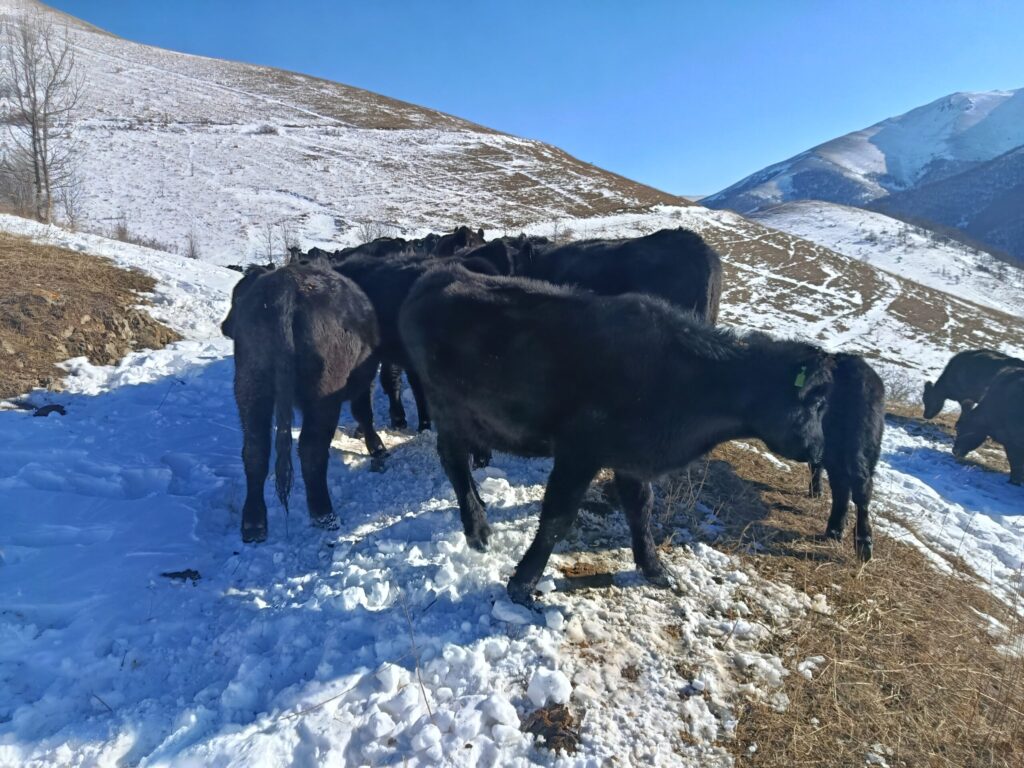
Cattle evolved as migratory herbivores in continental climates where winters were long, windy, and cold. Their survival depended on continuous movement across the landscape, not shelter inside structures. A ruminant’s rumen produces large amounts of heat during digestion, its winter hair coat provides excellent insulation, and fat reserves stabilize metabolism. When animals remain outdoors and continue grazing, their physiology functions as intended.
Winter grazing does not expose animals to hardship. Poor preparation exposes animals to hardship. The difference between success and failure is management.
The Real Cost of Feeding Winter
The greatest expense in cattle production is not land, animals, or fencing — it is feed harvested by machinery. Every kilogram of hay requires cutting, drying, baling, transport, stacking, storage loss, and feeding labour. After that, manure must still be handled separately because it accumulates in one place.
In mountainous terrain this becomes even more expensive. Steep slopes increase fuel use, shorten machinery life, and multiply labour. Feeding hay for four to five months means the farm temporarily stops being a grazing ecosystem and becomes a transport operation.
When animals harvest standing forage themselves, almost the entire chain disappears. The pasture stores the feed, the animal harvests it, and manure returns directly to soil fertility where it belongs. Farms that successfully implement winter grazing commonly reduce winter feeding expenses by roughly half to two-thirds, while also reducing labour during the harshest season.
Why Pasture Still Works After Snow
Pasture does not lose its value when temperatures fall below freezing. In cold climates grasses naturally cure and preserve themselves. Microbial decomposition slows dramatically, and snow often protects plants better than outdoor hay storage. The field effectively becomes a natural freezer.
The goal is not grazing growing grass in winter — the goal is grazing preserved grass.
Energy in mature forage remains adequate for dry cattle, while protein declines gradually through the season. With correct planning, animals meet most of their nutritional needs directly from pasture even in mid-winter conditions.
Stockpile Grazing — Storing Feed Without Harvesting It
The foundation of winter grazing is stockpile grazing. Instead of cutting all pasture in late summer, a portion of land is rested for approximately two to three months before winter. Plants regrow and remain standing until animals consume them during the cold season.
Under proper management, stockpiled pasture can produce around four to five tonnes of dry matter per hectare. Depending on animal size and winter severity, this can support several cows per hectare for roughly one month. The exact number varies, but the principle remains constant: the pasture becomes the feed storage structure.
While grazing, animals distribute manure evenly across the land and press plant residue into the soil surface. This improves soil organic matter, water retention, and spring growth without additional fertilizer or machinery.
Planning Begins in Summer
Winter grazing is decided in August, not after the first snowfall.
Selected paddocks are removed from rotation in late summer. They are grazed tightly or cut once to reset plants to vegetative growth, then rested for about sixty to eighty days. During this period plants accumulate biomass that will later serve as winter feed.
Grazing begins when plant growth stops in late autumn. Animals receive controlled daily or multi-day strips of pasture using temporary fencing so they consume forage efficiently and waste is minimized. Approximately ten centimetres of plant residue remains to protect soil and ensure strong spring regrowth.
During thaw periods animals are moved to prevent soil damage. Management follows soil conditions rather than calendar dates.
The Advantage of Mountain Landscapes
Mountain pastures often perform exceptionally well in winter grazing systems. Cool-season grasses retain structure above shallow snow and deteriorate slowly in cold temperatures. Forest edges reduce wind speed and create milder microclimates where animals prefer to rest.
Trees also act as natural shelter. Rather than standing in open wind, cattle position themselves along forest lines or terrain folds, reducing energy expenditure. This lowers maintenance energy requirements and improves feed efficiency.
Reliable water access remains important, although animals frequently consume snow when conditions allow. Proper mineral supplementation must still be available year-round.
Nutrition and Animal Condition
As forage matures, protein content decreases. Dry pregnant cows typically require about seven to nine percent crude protein. Late in winter some minimal supplementation may be beneficial, but this is a small adjustment rather than full feeding.
The most important factor is body condition at the start of winter. Animals entering winter in good condition adapt easily to cold and maintain weight. Animals entering thin will struggle regardless of whether they are indoors or outdoors.
Interestingly, cattle kept outdoors on dry ground often stay cleaner and healthier than animals standing in confined muddy feeding areas. Hoof health improves through movement, respiratory stress decreases, and behaviour becomes calmer because animals continue natural grazing patterns.
Soil Benefits — The Hidden Outcome
Winter grazing is not only a feeding strategy. It is also soil management.
Instead of concentrating manure in one location, nutrients spread across the entire pasture. Trampled plant material protects soil surface and feeds microorganisms. Spring growth begins earlier and more evenly. Over time the pasture becomes more resilient to both drought and heavy rain.
The farm gradually shifts from input-dependent feeding toward self-regenerating fertility.
A Different View of Winter
Winter does not stop grazing. It only changes how grazing must be managed.
With planning, pasture becomes the storage system, animals become the harvesters, and the farmer manages movement instead of transporting feed. Machinery runs less, costs decrease, and the land improves at the same time.
In mountain environments especially, winter grazing turns the most expensive season into part of the productive cycle. The cold months are no longer a pause in the grazing year — they are simply another phase of it.
Written by Ashot Boghossian
For Mountain High Farms
Leave a reply
Leave a reply