

Spring Pasture Turnout at High Altitude: Mountain High Farms Approach (Dilijan, 1700 m – 2000 m)
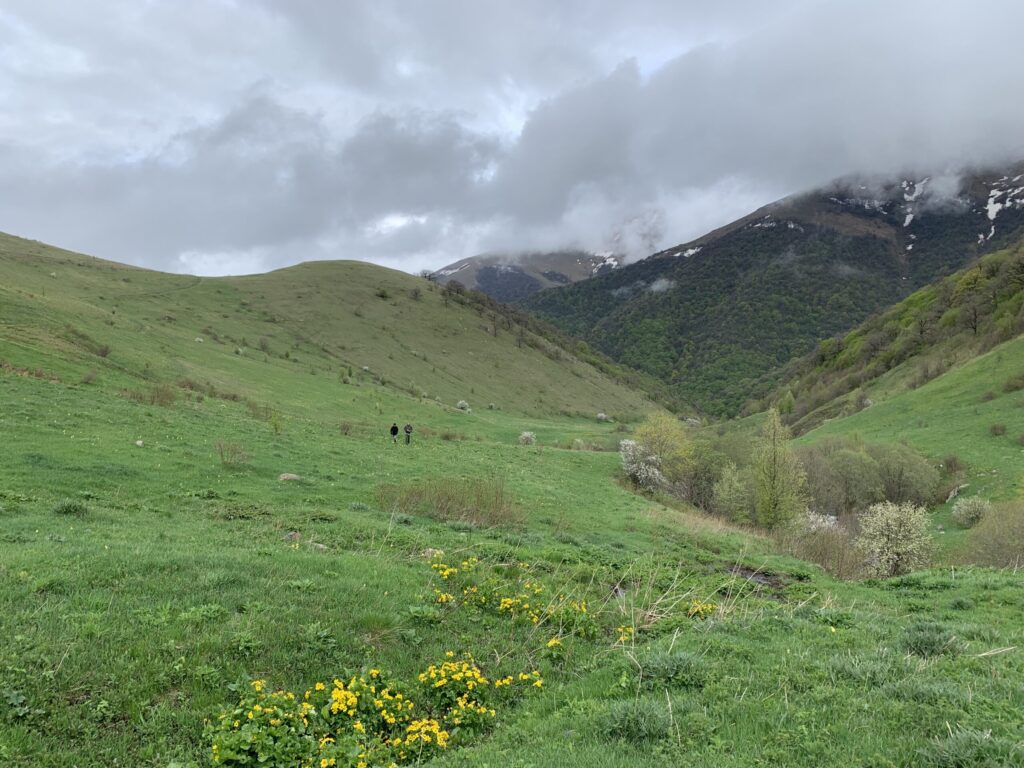
At Mountain High Farms, spring turnout is treated as a controlled biological transition rather than a calendar-driven event. At elevations around 1700–2000 meters in the Dilijan highlands, pasture systems behave differently from lowland environments. Snowmelt timing, soil temperature, moisture retention, and plant growth rates all shift the window of safe turnout. Moving cattle too early in these conditions does not simply reduce short-term forage availability—it can compromise the entire grazing season and weaken pasture resilience over multiple years.
Winter Stockpiled Grazing as the Transitional Phase
Before spring turnout begins, the herd remains on winter stockpiled pasture. This phase functions as both a nutritional stabilizer and a pasture protection strategy. Stockpiled forage maintains consistent dry matter intake and rumen stability, preventing abrupt metabolic shifts that would otherwise occur if animals moved directly from hay to lush pasture. At the same time, it removes early grazing pressure from emerging spring plants.
The transition from stockpiled pasture to active grazing is implemented gradually. Cattle are introduced to small sections of early pasture for limited periods while still relying on stockpiled forage. This controlled exposure allows the rumen microbiome to adapt incrementally to higher moisture and soluble nutrient content. It also enables close observation of pasture response and animal condition. A gradual transition reduces the risk of energy imbalance, protects plant recovery capacity, and establishes a more resilient start to the grazing season.
Forage Physiological Readiness
Forage readiness in high-altitude systems must be evaluated at the plant physiology level, not by surface appearance. In Dilijan conditions, early greening often occurs before root systems have fully reactivated after winter dormancy. Plants at this stage are operating on limited carbohydrate reserves stored in the crown and roots.
The requirement for at least three fully developed leaves per plant is not arbitrary—it represents the point at which the plant has rebuilt sufficient photosynthetic capacity to support both above-ground growth and root recovery. Grazing prior to this stage forces the plant to draw again on already depleted reserves, slowing regrowth and reducing total seasonal biomass production.
In practical terms, early grazing reduces the number of possible grazing cycles within the season. At 1700 meters, where the growing window is compressed, losing even one regrowth cycle has a measurable impact on carrying capacity. Therefore, delaying turnout until physiological readiness is achieved is a direct investment in total annual forage yield.
Water System Verification
Water systems in high-altitude environments are dynamic and often deceptive in early spring. Snowmelt can temporarily increase flow rates, but this does not guarantee stability. As meltwater declines, sources may rapidly diminish, exposing limitations in supply infrastructure.
Quality is equally critical. Spring runoff frequently carries organic debris, sediments, and dissolved minerals into water sources. Elevated total dissolved solids, bacterial contamination, or excessive organic load can reduce water intake or lead to subclinical health issues. Reduced water intake, even marginally, directly limits feed intake and grazing efficiency.
At Mountain High Farms, water points are evaluated for flow consistency, clarity, odor, and accessibility. Where necessary, alternative supply systems or controlled access points are used to maintain intake reliability. In rotational systems, water distribution must also align with paddock design to avoid uneven grazing patterns caused by water location constraints.
Botanical Risk Assessment
The Dilijan highland ecosystem is characterized by high plant diversity, which introduces both opportunity and risk. While diverse swards contribute to nutritional balance and ecological resilience, they also increase the likelihood of toxic or undesirable species being present.
Early in the season, when preferred forage is limited, cattle are more likely to consume non-target species. Some plants may contain compounds that affect liver function, neurological activity, or general metabolism, particularly when ingested in larger quantities due to scarcity of alternatives.
A systematic pre-turnout assessment involves identifying dominant species, mapping areas of concern, and determining whether intervention is required. This may include mechanical removal, targeted grazing exclusion, or delaying access to specific paddocks until desirable species become more dominant.
Botanical assessment is not a one-time action. It is part of an ongoing monitoring process, as species composition can shift rapidly in response to grazing pressure, moisture conditions, and soil disturbance.
Forage Structure and Nutritional Balance
Early-season forage in high-altitude environments presents a structural and nutritional imbalance. While visually abundant, these forages are typically characterized by high water content and rapid cellular growth, resulting in low dry matter concentration and insufficient energy density.
Cattle grazing such forage often reach rumen fill before meeting their energy requirements. This creates a negative energy balance despite apparent forage availability. The issue is particularly acute in animals with elevated nutritional demands, such as lactating cows and replacement heifers approaching breeding.
At Mountain High Farms, this risk is managed by synchronizing turnout with both forage maturity and herd physiological stage. In some cases, continued access to stockpiled forage or supplemental dry matter may be maintained during early grazing phases to balance intake.
The objective is to avoid a metabolic dip during a critical production window. In breeding animals, even a short-term energy deficit can disrupt hormonal cycles, delay estrus, and reduce conception rates. Therefore, forage structure is evaluated not only for quantity but for its ability to sustain productive performance.
Stocking Strategy and Grazing Pressure
Stocking strategy at turnout directly determines the trajectory of pasture performance for the entire season. Early overstocking concentrates grazing pressure on immature plants, reducing leaf area and limiting regrowth potential.
At Mountain High Farms, turnout is implemented in stages. Smaller groups of cattle are introduced to pasture sequentially, allowing grazing intensity to match available biomass. This approach maintains adequate residual leaf area, which is essential for rapid recovery and continued photosynthesis.
Dynamic stocking adjustments are made based on real-time observation of pasture utilization. If regrowth lags behind grazing pressure, stocking density is reduced or rotation speed is increased. This flexibility is critical in high-altitude systems, where growth rates can fluctuate significantly due to temperature and moisture variability.
The goal is to maintain a balance where plants are utilized but not stressed, preserving both immediate productivity and long-term pasture health.
Soil Integrity and Traffic Impact
Soil conditions in spring represent one of the most sensitive variables in high-altitude grazing systems. Prolonged snow cover and slow warming result in soils that are often saturated and structurally weak at the time when grazing pressure is first considered.
Hoof traffic under these conditions causes compaction and surface deformation, commonly referred to as pugging. This disrupts soil structure, reduces aeration, and impairs root development. In addition, disturbed soil surfaces expose previously buried weed seeds to light and temperature conditions favorable for germination.
The long-term consequence is a shift in pasture composition, often toward less desirable species, along with reduced infiltration capacity and increased runoff.
Turnout is therefore delayed until soils reach a threshold of firmness that can support animal movement without deformation. In some cases, grazing may begin on better-drained areas while avoiding more vulnerable zones. Protecting soil structure at the start of the season is a foundational requirement for maintaining pasture productivity.
Operational Coordination
Effective turnout management extends beyond biological factors into operational coordination. In landscapes where grazing areas are adjacent or shared, communication with neighboring producers reduces risks associated with livestock movement and boundary interactions.
Sharing information regarding turnout timing, herd composition, and identification systems allows for faster response to stray animals and minimizes conflicts. This is particularly relevant in extensive grazing systems where physical barriers may be limited or variable.
Operational clarity also supports internal management. Clear planning of grazing sequences, paddock allocation, and herd grouping ensures that turnout progresses according to strategy rather than reacting to short-term pressures.
Controlled Transition, Not a Calendar Event
Pasture turnout at Mountain High Farms is defined by synchronization—aligning plant physiology, animal nutrition, soil condition, water reliability, and operational execution. In a high-altitude environment with a limited growing window, each decision carries amplified consequences.
A disciplined, gradual, and observation-driven approach ensures that pasture systems reach their full productive capacity while supporting stable and efficient herd performance throughout the grazing season.
Authored by Ashot Boghossian
For Mountain High Farms
Leave a reply
Leave a reply