

Black Angus Spring Calving on Pasture: Why Timing Matters for Healthy Calves and Better Beef
Spring calving is one of the most important management decisions in a Black Angus beef operation. It determines when calves are born, when cows reach peak milk production, how much natural forage the herd can use, and how effectively the farm can reduce dependence on stored feed. In a pasture-based system, the timing of calving is not only a breeding decision. It is a whole-farm strategy.
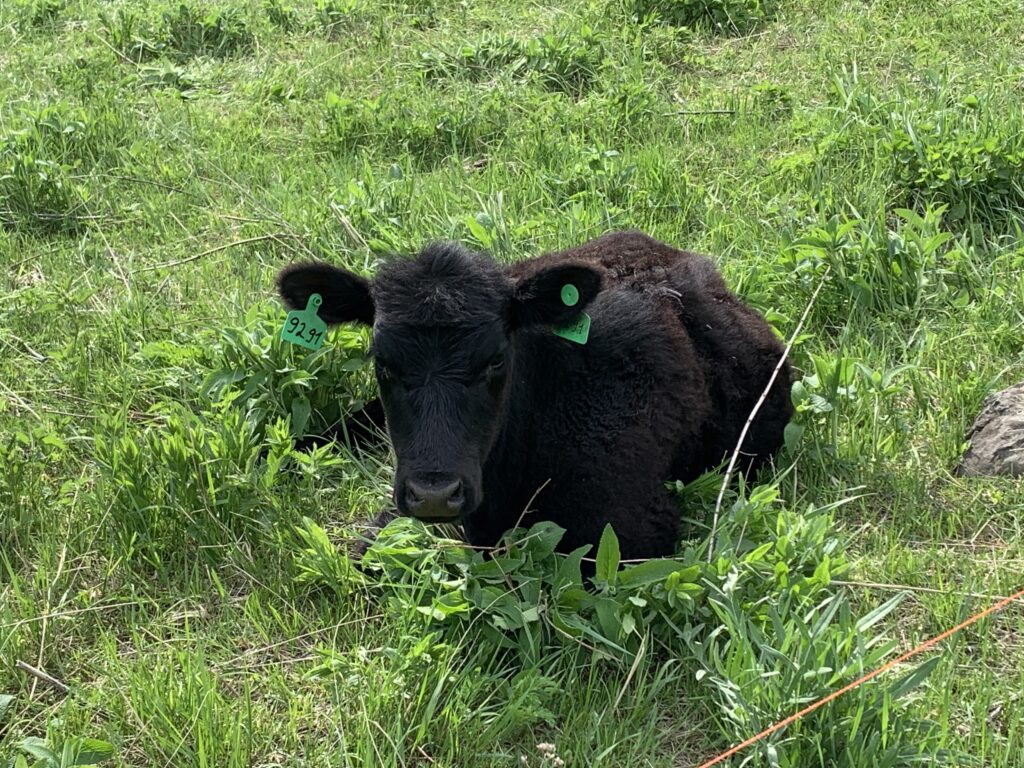
For Mountain High Farms, spring calving is especially important because our Black Angus cattle are raised on high-elevation alpine pastures under a regenerative grazing model. When calving is properly aligned with spring grass growth, cows can enter lactation during the period when fresh pasture begins to provide higher-quality nutrition. Calves also begin life in a cleaner, more natural environment, with more space, less confinement stress, and better access to their mothers.
Why Spring Calving Works for Black Angus Cattle
Black Angus cattle are widely valued for their maternal ability, fertility, hardiness, and efficient beef production. These characteristics make the breed well suited to spring calving systems, especially where pasture is the foundation of the production model.
In a well-managed spring calving season, calves are born just before or during the period when pasture growth accelerates. This allows the cow’s highest nutritional demand, which comes after calving during lactation, to coincide with the natural rise in forage availability. Instead of relying heavily on stored hay or purchased concentrates, the farm can use fresh grass as the main nutritional engine of the herd.
This timing also supports calf development. Spring-born calves benefit from improving weather, increasing milk production, and a long grazing season ahead. By the time colder months return, they are older, stronger, and better prepared for winter conditions.
The Importance of Matching Calving to Pasture Growth
In pasture-based beef production, timing is everything. Calving too early can expose newborn calves to cold, wet ground, limited forage, and weak cow nutrition. Calving too late can shorten the growing season available to the calf and reduce the efficiency of pasture use.
At high elevation, this balance becomes even more important. In mountain environments, spring does not arrive at the same time as it does in lowland areas. The calendar may say spring, but the soil, grass, and weather may still behave like late winter. For this reason, spring calving in alpine and highland systems must be based not only on dates, but also on actual pasture readiness.
The ideal calving window should support three goals at the same time: cows must have enough body condition before calving, newborn calves must have a dry and relatively clean environment, and pasture must begin providing enough nutrition to support lactation.
Cow Nutrition Before and After Calving
A successful Black Angus spring calving season begins weeks before the first calf is born. The body condition of the cow before calving has a direct effect on calving ease, colostrum quality, calf vigor, and the cow’s ability to return to breeding condition.
A cow that enters calving too thin may produce weaker colostrum, have reduced milk supply, and take longer to recover after birth. A cow that enters calving in proper condition is more likely to deliver a vigorous calf, produce enough milk, and breed back on time.
Fresh spring grass is valuable, but early spring pasture can sometimes be high in water and protein while still limited in dry matter and energy. This means the farmer should not rely only on the green appearance of the pasture. The real indicators are cow body condition, manure consistency, grazing behavior, milk production, and calf strength.
Mineral supplementation is also important before calving. A proper pre-calving mineral program helps support immune function, colostrum quality, reproductive performance, and newborn calf vitality.
Calf Health Begins with Clean Pasture
Pasture calving is often cleaner and less stressful than dry-lot or confined calving, but it still requires careful management. Disease pressure can build up when cows and calves remain too long in the same area, especially if older calves contaminate the ground where newborn calves are arriving.
The most important health principle is simple: newborn calves should be born on clean ground.
Clean pasture reduces exposure to manure-borne pathogens that can contribute to scours, navel infections, weakness, and other neonatal problems. In regenerative systems, this can be achieved by rotating cattle through calving areas in a way that prevents young calves from being mixed with older calves on heavily used ground.
Sheltered areas also need attention. Cattle naturally gather near windbreaks, trees, water points, feeding areas, and bedding spots. These locations may become contaminated faster than open pasture. If the ground is wet, muddy, or heavily manured, it can become a serious risk for newborn calves.
Colostrum: The First Critical Meal
For every calf, the first hours of life are decisive. Colostrum is the first milk produced by the cow after calving, and it contains the antibodies and nutrients the calf needs to build early immunity.
The sooner the calf nurses, the better. A strong calf should stand and suckle quickly. If a calf is weak, cold, slow to rise, or unable to nurse properly, intervention may be necessary. In pasture systems, regular observation during calving season is essential, even if the goal is to maintain a low-stress and natural environment.
Good colostrum intake is one of the most important protections against early calf disease. It does not replace clean pasture, good cow nutrition, or proper herd health planning, but it is the foundation of newborn calf survival.
Why Regenerative Grazing Improves the Calving System
Regenerative grazing is not only about grass recovery and soil health. It also plays a direct role in animal health and production efficiency.
When cattle are moved strategically, pasture has time to recover, manure is distributed more evenly, and animals are less likely to remain in contaminated areas. This improves forage quality and reduces the buildup of disease pressure. During calving season, regenerative grazing must be adapted carefully so that the movement of the herd supports both pasture recovery and calf protection.
A strong spring calving system should combine good grazing planning, clean calving areas, proper cow nutrition, and close observation of newborn calves. When these elements work together, the result is a healthier herd and a more resilient production model.
Spring Calving and Beef Quality
The benefits of spring calving extend beyond the calving season itself. A calf that begins life well, nurses strongly, grows on pasture, and experiences lower stress is more likely to develop into a healthy and efficient beef animal.
For premium Black Angus beef production, this matters. Meat quality is not created only at the finishing stage. It begins with genetics, maternal care, early calf health, pasture nutrition, and low-stress management throughout the animal’s life.
In a pasture-based Black Angus system, spring calving helps connect the biological needs of the animal with the natural productivity of the land. This is one of the reasons it fits so well into regenerative beef production.
Mountain High Farms’ Approach to Spring Calving
At Mountain High Farms, spring calving is part of a broader commitment to regenerative agriculture, animal welfare, and transparent beef production. Our Black Angus cattle are raised on alpine pastures where herd management is designed around seasonal grass growth, clean grazing areas, and the natural behavior of the animals.
The goal is not simply to produce calves. The goal is to build a stronger herd, improve land health, reduce unnecessary feed dependence, and produce high-quality beef from animals raised in a low-stress pasture environment.
Spring calving allows us to work with nature rather than against it. When cows calve as the land begins to recover and grow, the entire production system becomes more balanced. Calves are born into a cleaner and more natural environment. Cows receive better seasonal nutrition. Pastures are used more efficiently. The final beef product reflects a system based on timing, care, and ecological logic.
Black Angus spring calving is more than a seasonal event. It is a management strategy that connects herd fertility, calf health, pasture growth, cow nutrition, and beef quality.
When properly managed, spring calving helps reduce stress, improve calf vigor, support lactating cows, and strengthen the economics of pasture-based beef production. In regenerative systems, it also helps align livestock production with the natural rhythm of the land.
For Mountain High Farms, this is why spring calving is central to our Black Angus program. It supports healthier calves, stronger cows, better use of alpine pasture, and a more transparent path from pasture to plate.
Written by Ashot Boghossian, for Mountain High Farms
Leave a reply
Leave a reply